Overview
duckrun is glue over DuckDB + delta-rs + dbt-duckdb. It gives you two surfaces over
the same engine split: a notebook connect() helper for ad-hoc SQL over Delta, and a dbt
adapter that materializes models as Delta tables. Concurrent writers are first-class —
every write is snapshot-pinned and fails loud rather than silently interleaving.
How it works
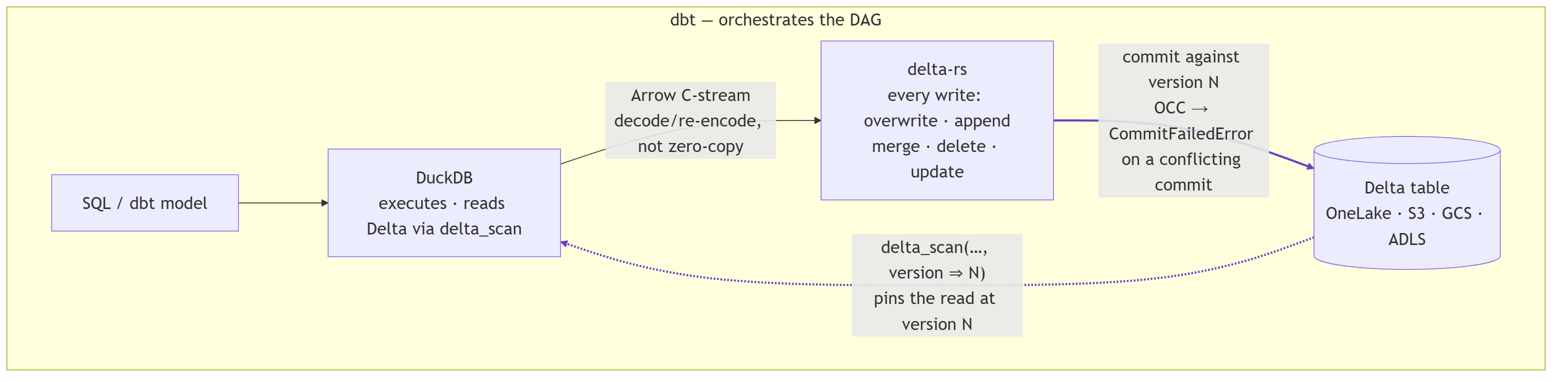
Two engines, split cleanly: DuckDB runs every query and reads Delta through delta_scan
views, delta-rs handles every write, an Arrow C-stream bridges them, and dbt orchestrates
on top.

Writes are snapshot-pinned: the read is fixed at delta_scan(…, version => N) and the
write commits against N, so a concurrent commit is rejected with CommitFailedError
instead of silently overwriting a lost update.
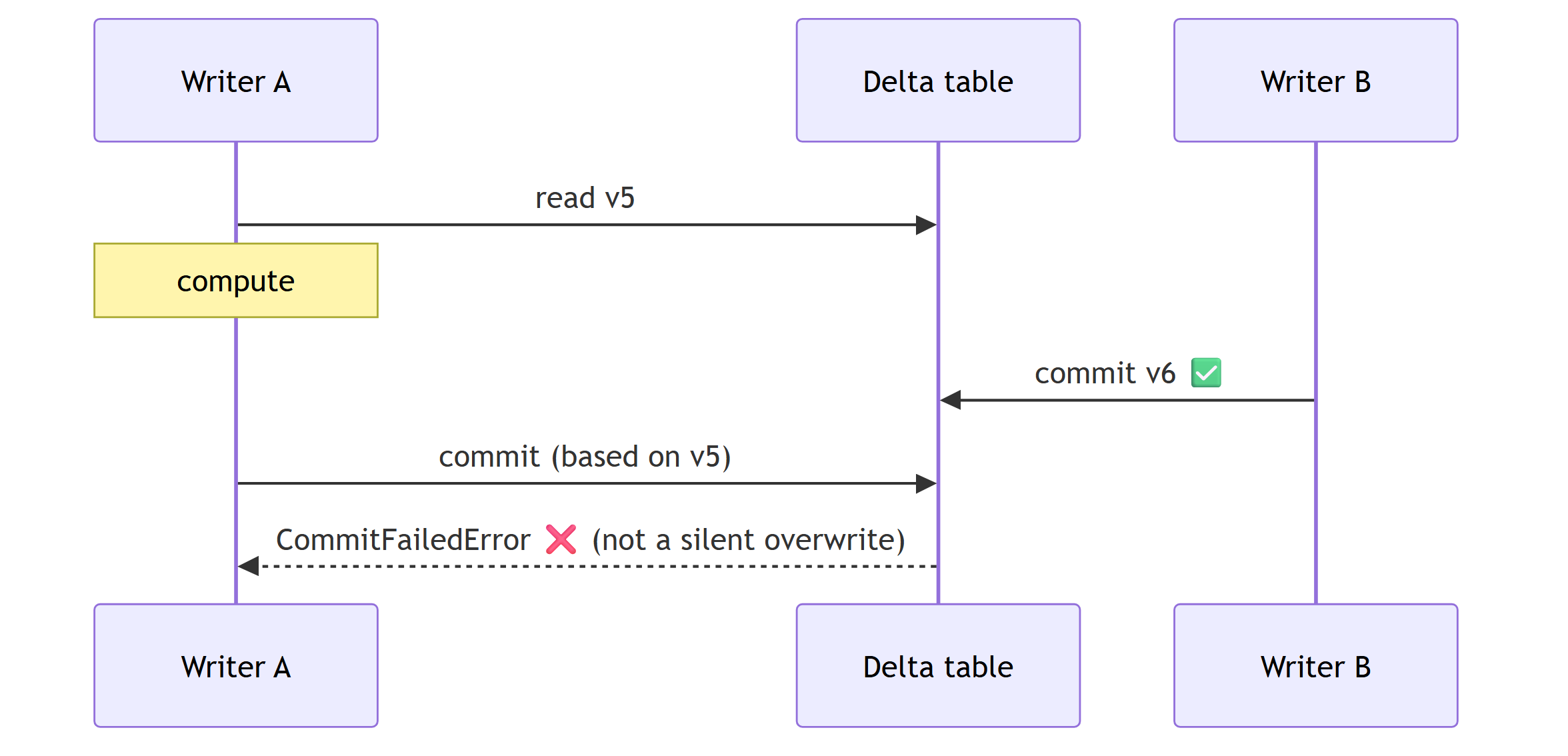
The full model — and how it compares to delta-rs, Spark/Delta, and an RDBMS — is in Snapshot isolation. The engine-split rationale is in the Design document.
Why duckrun
-
Snapshot-pinned writes
Every read-modify-write is fenced to the version it read. A concurrent commit is rejected with
CommitFailedErrorinstead of silently overwriting a lost update. -
Two engines, split cleanly
DuckDB runs every query and reads Delta via
delta_scan; delta-rs handles every write; an Arrow C-stream bridges them. -
A real dbt adapter
A thin wrapper around
dbt-duckdbthat adds Delta-backedtable/incrementalmaterializations — everything else is inherited. -
Multiple catalogs
Attach more lakehouses (or a read-only Fabric Warehouse) and read / join across them by three-part
catalog.schema.tablename. -
Automatic maintenance
Compaction, vacuum, and log cleanup run inline on every write — no
OPTIMIZE/VACUUMjob to schedule. -
SQL-first DML
conn.sqlappliesinsert/update/delete/mergethrough delta-rs — identical locally and on OneLake.